Feral Goat Hunting offers serious sportsmen an opportunity to pursue one of the most adaptable and geographically widespread members of the goat family. Found across mountains, rocky coastlines, remote islands, and open hill country, feral goats have established wild populations in regions far removed from their domestic origins. Their considerable variation in coloration, horn configuration, and physical characteristics makes them an interesting quarry for hunters pursuing specialized international trophy categories.
Although descended from domestic goats, feral populations can develop the cautious behavior, physical endurance, and exceptional agility associated with animals living independently in demanding environments. Mature billies frequently occupy steep slopes, broken ridgelines, and rocky country where careful observation and deliberate movement are essential.
For experienced international hunters, Feral Goat Hunting is especially relevant within the broader pursuit of mountain goats and ibex. Grand Slam Club/Ovis recognizes the feral goat as a distinct trophy category, while certain populations with wild goat ancestry are classified separately as Bezoar Hybrid Ibex or Kri-Kri Hybrid Ibex.
Understanding these distinctions is important. Geographic origin, physical characteristics, and the applicable trophy-record standards can influence how an animal is classified.
The Hunting Consortium brings decades of international hunting experience to the evaluation and planning of specialized expeditions. Our advisors help clients identify appropriate destinations, understand trophy classifications, and coordinate the practical details required for hunting in difficult country.
Feral goats are descendants of domesticated goats, Capra hircus, that have established populations outside direct human management.
Domestic goats have accompanied human settlements for thousands of years. As people expanded across continents and islands, goats were transported for their meat, milk, hides, and ability to survive on relatively limited forage.
Some animals escaped confinement, while others were deliberately released into unfamiliar environments.
Over successive generations, these populations adapted to local conditions and developed the behaviors characteristic of animals living independently in the wild.
Today, feral goats inhabit numerous regions of the world, with substantial differences in appearance and population history.
One of the distinguishing features of feral goats is their considerable variation in physical appearance.
Unlike a narrowly defined wild species with relatively consistent characteristics, feral goat populations may contain ancestry from several domestic breeds.
Consequently, body size, coloration, hair length, horn configuration, and overall proportions can differ significantly.
Some animals display predominantly black or dark brown coats, while others exhibit white, gray, tan, reddish, or mixed coloration.
In certain populations, mature males develop long, coarse coats and substantial beards.
Others retain relatively short hair suited to warmer, drier environments.
Despite these differences, many feral goats share a compact, muscular build and powerful limbs that allow them to move confidently across steep or uneven terrain.
The horns of mature feral goat billies are a principal attraction for international trophy collectors.
Horn development varies considerably according to ancestry, age, nutrition, and individual characteristics.
Some animals possess broad horns sweeping outward from the head before curving backward.
Others develop tighter corkscrew formations or relatively upright configurations.
Grand Slam Club/Ovis describes the traditional feral goat horn form as a horizontal corkscrew that rises from the skull and sweeps outward, sometimes developing several turns.
However, not every feral goat exhibits this configuration.
Trophy evaluation should consider the recognized classification, overall horn development, symmetry, and the maturity of the animal.
For The Hunting Consortium, accurate identification is especially important when a client’s objective involves a particular international trophy-record milestone.
Feral Goat Hunting opportunities occur in several parts of the world, including Europe, Asia, Australia, New Zealand, and portions of the Americas.
However, the presence of feral goats does not automatically establish recreational hunting access.
Land ownership, wildlife regulations, protected-area designations, and the status of individual populations determine where hunting may be authorized.
The Hunting Consortium helps clients distinguish between established feral populations, managed hunting properties, and specialized hybrid classifications.
Turkey is particularly significant to international mountain hunters because of its established populations of wild Bezoar ibex and the presence of animals exhibiting mixed domestic and wild goat ancestry.
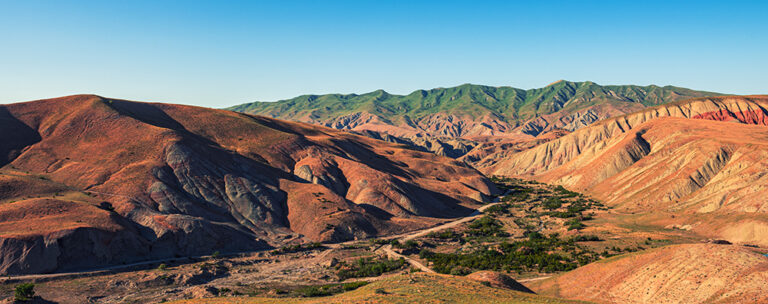
The country’s mountainous landscapes include steep limestone ridges, broken valleys, rocky slopes, and areas of sparse woodland.
These environments can create demanding conditions for hunters pursuing mature mountain goats and ibex.
In certain regions, domestic goats and wild ibex have historically occurred in proximity, creating the possibility of hybridization.
For collectors, the distinction between a pure Bezoar ibex, a Bezoar Hybrid Ibex, and an ordinary feral goat is essential.
These animals may occupy similar terrain but are not interchangeable trophy categories.
Turkey maintains a regulated hunting-tourism framework requiring appropriate authorizations, designated hunting areas, and species-specific quotas.
The Hunting Consortium helps clients evaluate suitable opportunities according to these requirements and the classification of the intended trophy.
The Mediterranean region has a long history of domestic goat introductions, particularly on islands where livestock was maintained for food and agricultural purposes.
Over time, some populations became feral and developed characteristics suited to steep coastal terrain and rocky island environments.
Croatia is particularly relevant because of the Kri-Kri Hybrid Ibex associated with Dugi Otok Island in the Adriatic Sea.
These animals represent a specialized trophy classification rather than ordinary feral goats.
For serious mountain hunters, the Croatian populations offer an interesting connection between the region’s agricultural history and the development of distinctive feral and hybrid goat forms.
Hunting access must be confirmed through appropriately authorized operators and the applicable national and local regulations.
New Zealand supports widespread populations of feral goats descended from domestic animals introduced during European settlement.
The animals occur in numerous parts of the North and South Islands, occupying bushland, open hillsides, scrub-covered slopes, and other suitable habitats.
New Zealand’s Department of Conservation recognizes feral goats as introduced animals that can damage native vegetation through browsing and trampling.
Feral Goat Hunting can form part of wildlife management activities where legally authorized.
On public conservation land, hunters generally require the appropriate Department of Conservation permit.
Hunting may be possible throughout the year, although restrictions can apply to individual areas or periods.
For international hunters, New Zealand offers opportunities to pursue feral goats in landscapes ranging from relatively accessible hill country to more demanding terrain.
Australia contains extensive populations of feral goats, particularly in dry rangeland environments.
Introduced domestic goats became established in the wild and subsequently expanded through suitable habitats.
Today, feral goats occur across significant portions of the continent, including rocky ranges, scrublands, and grazing country.
Australian wildlife and agricultural authorities classify feral goats as invasive animals because of their effects on vegetation, agricultural operations, and native ecosystems.
Hunting and other control methods are used within broader land-management programs.
Private-property access, state regulations, and the management objectives of the individual operation determine available hunting opportunities.
For serious sportsmen, the quality of an Australian feral goat expedition depends on the selected property, animal characteristics, and the experience of the professional operator.
For international trophy collectors, one of the most important distinctions in Feral Goat Hunting involves the relationship between ordinary feral goats and recognized hybrid ibex categories.
Although these animals share domestic goat ancestry, they may have different geographic origins, horn characteristics, and record-book eligibility.
Grand Slam Club/Ovis recognizes Feral Goat, Bezoar Hybrid Ibex, and Kri-Kri Hybrid Ibex as separate Capra trophy categories.
Understanding these classifications before an expedition helps prevent confusion when documenting an animal.
The Bezoar ibex is a wild goat native to mountainous regions of western and central Asia.
Bezoar Hybrid Ibex are associated with populations exhibiting characteristics of both wild Bezoar ibex and domestic goats.
These animals have been particularly associated with the Adıyaman Mountains of southeastern Turkey.
Hybrid characteristics can include variations in coat coloration, facial profile, ear shape, and horn development.
Where pure Bezoar ibex typically possess long, sweeping horns with pronounced front ridges, recognized hybrids may display broader horns with greater outward flare.
Some individuals also show domestic-type facial characteristics or ears.
Because appearance can vary considerably, the distinction between a pure Bezoar ibex and a hybrid requires careful evaluation.
Grand Slam Club/Ovis updated its Bezoar Hybrid Ibex classification rules effective June 1, 2026.
Under the updated standard, Bezoar ibex taken in designated portions of Adıyaman, neighboring Kahramanmaraş, and western Malatya are classified as Bezoar Hybrid Ibex.
Animals submitted from outside the designated hybrid zone must exhibit identifiable hybrid characteristics to qualify for the hybrid category.
For international trophy collectors, these distinctions can have a direct effect on record-book documentation.
The Bezoar Hybrid Ibex does not count toward the twelve required categories for the Capra World Slam.
However, it may qualify for the GSCO Super 20 and Super 30 milestones, subject to the organization’s applicable rules.
The Hunting Consortium recommends confirming the intended classification and geographic requirements before selecting a particular Turkish hunting area.
The Kri-Kri Hybrid Ibex is another recognized category associated with mixed wild and domestic goat ancestry.
Grand Slam Club/Ovis identifies Dugi Otok Island, located off Croatia’s Adriatic coast, as a principal location associated with this form.
These animals are distinguished by their sturdy build, coarse hair, pronounced beard, and characteristic coloration.
Mature animals commonly display a light tan or yellowish coat with contrasting dark markings along the back, shoulders, and legs.
The dark pattern may create the appearance of a cross extending across the body.
The horns generally rise upward and backward before spreading laterally into a tight spiral.
These characteristics distinguish the Kri-Kri Hybrid Ibex from many ordinary feral goat populations.
Grand Slam Club/Ovis recognizes the Kri-Kri Hybrid Ibex as a separate trophy category.
Like the Bezoar Hybrid Ibex, it does not qualify as one of the twelve required species or subspecies for the Capra World Slam.
However, it may count toward the Super 20 and Super 30 milestones under the organization’s established rules.
Trophy classification standards can differ between record-keeping organizations.
For example, an animal recognized as a hybrid by one organization may be classified differently by another according to coloration, horn configuration, or geographic origin.
Serious collectors should therefore confirm the applicable requirements before arranging a hunt.
Feral Goat Hunting has a specific place within the international mountain hunting community.
Grand Slam Club/Ovis recognizes numerous species and subspecies within its Capra World Slam program, including several distinctive wild goats, ibex, and related mountain animals.
However, the organization’s rules distinguish between the original Capra World Slam and its additional milestones.
Under the current Grand Slam Club/Ovis classification system, the ordinary Feral Goat category does not count toward the twelve qualifying animals required for the Capra World Slam.
It also does not count toward the Super 20 milestone.
However, a qualifying free-ranging Feral Goat may count toward the Super 30.
By comparison, the Bezoar Hybrid Ibex and Kri-Kri Hybrid Ibex may count toward both Super 20 and Super 30, although neither qualifies toward the original twelve.
These distinctions make accurate trophy identification essential.
For collectors pursuing specific milestones, The Hunting Consortium helps evaluate the relevant species classification before a destination is selected.
The difficulty of Feral Goat Hunting varies considerably according to the location, terrain, and behavior of the population being pursued.
Some feral goats occupy relatively accessible grazing country, while others inhabit steep mountain slopes, rocky coastal islands, and broken terrain that demands substantial physical effort.
Animals living with limited human contact may be particularly wary, often retreating quickly when disturbed.
Their exceptional climbing ability allows them to move through terrain that can be difficult for hunters to negotiate safely.
In mountainous regions, feral goats frequently use steep slopes, rocky outcrops, and narrow ridgelines.
These environments provide elevated observation points and access to feeding areas that may be difficult for larger animals to reach.
For hunters, the physical demands may include substantial climbs, careful movement across uneven ground, and extended periods of observation.
Appropriate conditioning and a realistic understanding of the proposed hunting area are important considerations.
Feral goats are social animals that may occur in groups, although mature males can sometimes be encountered separately.
Feeding movements are influenced by vegetation, water availability, weather, and disturbance.
Where animals have experienced considerable human activity, they may become especially cautious.
For experienced sportsmen, the pursuit rewards patience and careful observation rather than hurried decisions.
Where legally authorized, Feral Goat Hunting generally involves traditional spot-and-stalk techniques, tracking, and observation of suitable terrain.
The appropriate approach depends on the location, animal behavior, prevailing conditions, and the guidance of the professional hunting team.
Spot-and-stalk hunting is a common method for pursuing feral goats in open and mountainous country.
Professional guides may observe ridgelines, rocky slopes, and feeding areas to identify mature animals.
Once a suitable trophy has been located, the surrounding terrain is evaluated to determine whether a responsible approach is possible.
Because goats are capable of detecting movement and retreating rapidly, patience and disciplined fieldcraft are essential.
Tracking may provide useful information about the movements of animals through a particular hunting area.
Hoofprints, feeding signs, and other evidence of recent activity can help experienced professionals understand where goats have traveled.
However, the significance of these signs depends on the terrain and the presence of other livestock or wildlife.
Accurate interpretation requires familiarity with the surrounding environment.
For trophy hunters, identifying a mature billy is an important part of the pursuit.
Horns may differ substantially in length, mass, symmetry, and shape.
Where an animal is being considered for a recognized hybrid category, additional physical characteristics may need to be evaluated.
Professional hunters should understand the relevant trophy-record standards before advising a client on an individual animal.
Preparation for Feral Goat Hunting should reflect the characteristics of the selected destination.
Mountainous areas may involve substantial physical exertion, while coastal islands can present additional challenges associated with changing weather, difficult access, and limited infrastructure.
Hunters should be comfortable moving through uneven terrain and maintaining concentration during extended periods in the field.
Dependable footwear with suitable traction is particularly important when navigating rocky ground and steep slopes.
Layered clothing and weather protection should be selected according to the climate and expected conditions.
Quality binoculars are valuable for observing animals and evaluating horn characteristics from a distance.
Firearm and ammunition requirements should be discussed with the professional operator to ensure suitability for the planned hunt and compliance with local regulations.
International Feral Goat Hunting expeditions require careful coordination of transportation, accommodations, hunting permits, firearm documentation, and trophy handling.
Requirements vary between destinations.
In New Zealand, hunting on public conservation land generally requires a Department of Conservation permit.
In Turkey, international hunters must comply with the country’s regulated hunting-tourism system and applicable species authorizations.
In Croatia, access to specialized hybrid populations must be confirmed through properly authorized operators.
The Hunting Consortium helps clients understand these requirements and coordinate practical arrangements with experienced local professionals.
Responsible Feral Goat Hunting requires an understanding of the ecological circumstances associated with introduced animals.
Although feral goats are valued by hunters for their distinctive horn configurations and ability to thrive in difficult terrain, they can also create environmental pressures in regions where they are not native.
Heavy browsing and grazing may affect vegetation, contribute to soil disturbance, and place pressure on sensitive habitats.
New Zealand’s Department of Conservation identifies feral goats as introduced animals capable of damaging native vegetation.
Management programs may involve ground hunting, aerial control, trapping, and other methods appropriate to local conditions.
Australian authorities similarly recognize feral goats as invasive animals affecting agriculture, biodiversity, and vegetation.
In suitable circumstances, regulated hunting may contribute to population-management objectives.
However, the environmental benefits of an individual hunting program should be assessed according to documented local conditions.
The management of hybrid ibex requires a different perspective from that of ordinary feral goats.
Hybrid populations may exist in areas also supporting genetically distinctive wild goat species.
Where domestic and wild goats interbreed, wildlife managers may need to consider the preservation of the genetic characteristics of native populations.
For international hunters, these circumstances reinforce the importance of accurate classification and responsible destination selection.
The Hunting Consortium recognizes that ethical hunting requires legal compliance, informed judgment, and respect for the wildlife management priorities of the selected country.
Feral Goat Hunting may be considered as part of a broader international hunting itinerary, depending on the destination and available opportunities.
In Turkey, specialized hunting programs may involve other authorized mountain game species, although geographic distribution and harvest quotas differ considerably.
In New Zealand, hunters may consider opportunities involving Himalayan tahr, chamois, red deer, or other introduced game.
In parts of Europe, additional mountain hunting objectives may include recognized ibex, chamois, or mouflon populations.
However, the presence of several species within a country does not establish that they are available within the same hunting area.
The Hunting Consortium helps clients evaluate realistic combinations while maintaining a clear focus on their principal trophy objectives.
The Hunting Consortium has decades of experience helping serious sportsmen pursue specialized international hunting opportunities and feral goat hunting.
Our approach emphasizes informed destination selection, experienced professional relationships, realistic trophy expectations, and careful logistical planning.
For Feral Goat Hunting, these considerations include the classification of the animal, the quality of the selected hunting area, the characteristics of available trophies, and the professional standards maintained by the operator.
We understand that a hunter pursuing an ordinary Feral Goat may have different objectives from a collector seeking a Bezoar Hybrid Ibex or Kri-Kri Hybrid Ibex recognized by Grand Slam Club/Ovis.
These distinctions should be established before an expedition is selected.
Our advisors help clients understand the relevant classifications, evaluate available opportunities, and coordinate the practical requirements of hunting in demanding international destinations.
Feral Goat Hunting offers a distinctive pursuit across some of the world’s most varied landscapes, from the rocky mountains of Turkey to the coastal islands of the Mediterranean and the rugged country of New Zealand and Australia.
The considerable variation in physical characteristics, horn development, and geographic history makes feral goats particularly interesting to international trophy collectors.
For sportsmen pursuing recognized Capra milestones, careful distinction between ordinary feral goats and hybrid ibex categories is essential.
The Hunting Consortium provides experienced guidance in evaluating hunting destinations, understanding trophy-record requirements, and coordinating the practical details of specialized expeditions.
Contact The Hunting Consortium to discuss Feral Goat Hunting, Bezoar Hybrid Ibex, Kri-Kri Hybrid Ibex, trophy classifications, and the professional guidance available for planning your next international mountain hunting expedition.
"*" indicates required fields