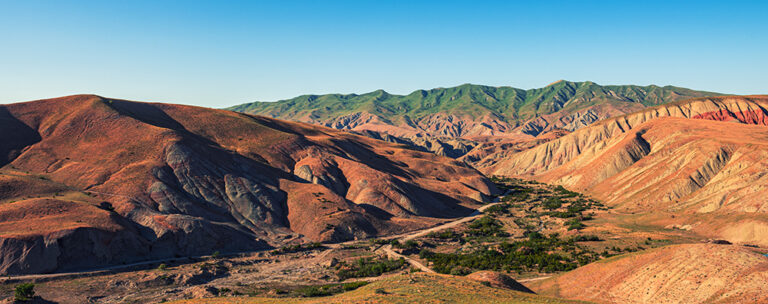
Alpine chamois hunting in New Zealand offers serious sportsmen an exceptional opportunity to pursue one of the world’s most agile mountain game animals. Across the rugged ranges of the South Island, steep slopes, rocky ridgelines, and expansive alpine basins provide the setting for a demanding hunt that rewards patience, physical preparation, and disciplined fieldcraft.
Originally introduced from Europe, chamois have become established throughout much of New Zealand’s South Island. Their remarkable climbing ability, sharp eyesight, and preference for difficult terrain make them particularly appealing to hunters who appreciate traditional mountain stalking.
Unlike larger mountain game, the chamois is a relatively small animal. Its challenge lies not in extraordinary size but in its ability to detect danger and escape across terrain that can be difficult for even experienced hunters to negotiate.
The Hunting Consortium helps international sportsmen evaluate New Zealand’s mountain hunting opportunities, select appropriate professional operators, and coordinate the practical details necessary for a carefully planned expedition.
The Alpine chamois (Rupicapra rupicapra) is a European mountain ungulate belonging to the family Bovidae. Native populations inhabit mountainous regions of Europe, where the species has developed remarkable adaptations for surviving in steep, rocky environments.
Chamois were introduced to New Zealand in 1907 and subsequently established throughout significant portions of the South Island. The animals adapted successfully to the Southern Alps and surrounding mountain systems, where suitable grazing habitat and extensive alpine terrain support free-ranging populations.
Today, New Zealand represents an important destination for hunters interested in pursuing Alpine chamois outside their native European range.
Chamois possess a compact, muscular body, relatively slender legs, and specialized hooves that provide excellent traction on rocky surfaces.
Adult males, known as bucks, commonly weigh approximately 25 to 45 kilograms, while females, or does, are generally smaller.
Their seasonal coat changes considerably throughout the year. During summer, chamois display lighter coloration ranging from grayish brown to tan and golden brown. As winter approaches, their coat becomes darker, thicker, and more pronounced.
Distinctive facial markings include dark bands extending across the eyes toward the muzzle, contrasting with lighter areas around the cheeks and throat.
Both male and female chamois possess slender black horns that rise upward before curving sharply backward near the tips.
These hooked horns are among the species’ most recognizable characteristics and form the principal basis of trophy evaluation.
The South Island is the primary destination for Alpine chamois hunting in New Zealand. Its mountainous interior provides a broad range of habitats, from open alpine grasslands to steep forested valleys and rocky ridgelines.
Chamois occur across much of the South Island, from the Marlborough region in the north through the central Southern Alps and toward Fiordland in the south.
The Southern Alps form the backbone of New Zealand’s South Island and provide some of the country’s most demanding mountain hunting terrain.
These mountains are characterized by steep slopes, exposed rock faces, alpine basins, and substantial changes in elevation.
For the hunter, this environment creates both opportunity and difficulty. Chamois may be observed feeding on open slopes before retreating into broken terrain where approaching them becomes considerably more challenging.
Experienced local guides use their knowledge of seasonal animal movements and mountain conditions to identify suitable hunting areas.
Canterbury contains extensive high-country landscapes associated with traditional New Zealand mountain hunting.
The region includes alpine valleys, rocky ridgelines, open tussock slopes, and mountain basins where chamois may be encountered.
Depending on the selected area, hunters may approach their quarry through extended walking and glassing or use authorized transportation to reach remote mountain locations.
The diversity of the terrain allows the physical character of an expedition to vary considerably between hunting areas.
New Zealand’s West Coast provides a different mountain environment, characterized by substantial rainfall, dense vegetation, and dramatic terrain.
Chamois occur in alpine environments and may also occupy lower-elevation forest margins, rocky outcrops, and river catchments.
Fiordland and surrounding southern mountain regions provide additional habitat, although local densities and accessibility vary.
For international hunters, selecting the appropriate location requires an understanding of regional animal populations, weather conditions, and the practical demands of reaching suitable hunting country.
Alpine chamois hunting is particularly appealing to sportsmen who value the discipline of traditional spot-and-stalk mountain hunting.
The animals are alert, exceptionally agile, and capable of moving through difficult terrain with remarkable speed.
Successful hunting requires careful observation, understanding of the surrounding landscape, and the patience to approach an animal without disturbing it.
The experience is often defined by extended periods of glassing across vast mountain slopes, followed by a deliberate approach through terrain offering limited natural cover.
For serious sportsmen, these challenges are central to the appeal of hunting chamois in New Zealand.
New Zealand offers a mountain hunting environment substantially different from the traditional European Alps.
The Southern Alps combine dramatic elevation changes, remote valleys, expansive tussock country, and unpredictable weather.
Chamois have adapted to these conditions, establishing free-ranging populations across a wide variety of mountain habitats.
Unlike some European hunting destinations where tightly regulated seasonal quotas may determine access, New Zealand generally permits year-round chamois hunting on authorized land, subject to property permissions, public-land permits, and local restrictions.
This flexibility can provide opportunities to select an expedition according to desired trophy characteristics, weather conditions, and the broader objectives of the hunter.
For international trophy collectors, Alpine chamois hunting offers an opportunity to pursue an animal with distinctive horn development and seasonal coat characteristics.
Unlike ibex or wild sheep, chamois possess relatively slender horns that rise almost vertically before forming a pronounced backward hook.
Both sexes carry horns, although mature bucks generally display heavier bases and more pronounced hooks.
Trophy assessment may consider horn length, circumference, spread, and other measurements according to the scoring system used.
However, horn measurements alone do not determine the quality of a hunting experience.
Experienced local guides consider the maturity of the animal, individual horn characteristics, and the circumstances under which an appropriate opportunity develops.
One distinctive feature of chamois trophy hunting is the animal’s seasonal coat.
During New Zealand’s winter months, chamois develop a much darker and thicker coat, creating a striking contrast with their lighter facial markings.
For hunters interested in a full-body mount or shoulder mount, coat condition may influence the preferred timing of an expedition.
Autumn and winter are often favored by trophy hunters seeking mature bucks with well-developed horns and attractive dark coats.
Traditional Alpine chamois hunting in New Zealand relies heavily on observation, careful stalking, and an understanding of how these animals use steep terrain.
Spot-and-stalk hunting is one of the principal methods used to pursue chamois in New Zealand.
The process usually begins with glassing suitable slopes, ridgelines, and alpine feeding areas from a distance.
Once an appropriate animal has been identified, the hunter and guide evaluate the surrounding terrain to determine whether a responsible approach is possible.
Chamois possess excellent eyesight and are particularly sensitive to movement. Approaching without detection requires patience, careful route selection, and awareness of wind direction.
Experienced mountain hunters understand that a promising animal may not always present a practical or safe opportunity.
High-country stalking involves traveling through mountain terrain where changes in elevation, loose rock, and exposed slopes can create substantial physical demands.
Chamois frequently occupy vantage points that provide broad views of their surroundings.
Hunters may spend considerable time evaluating distant animals before attempting to close the distance.
Successful stalking requires discipline and the judgment to avoid unnecessary movement across exposed ground.
The Hunting Consortium emphasizes the importance of qualified local guides familiar with the terrain and the behavior of the animals being pursued.
New Zealand generally permits chamois hunting throughout the year on authorized hunting land. However, seasonal conditions can significantly influence the experience.
The chamois breeding season generally begins during May and reaches peak activity around late May and early June.
During the rut, mature bucks may become more visible and active as they compete for access to females.
This behavior can create opportunities to observe mature animals and evaluate their trophy characteristics.
Autumn also marks the development of the darker winter coat, making this period particularly attractive to trophy hunters.
Winter brings colder temperatures, shorter daylight hours, and the possibility of snow across much of New Zealand’s alpine country.
These conditions create a demanding hunting environment but can also provide opportunities to pursue chamois carrying their full winter coats.
Weather, avalanche conditions, and access limitations must be carefully evaluated before undertaking a winter mountain expedition.
Summer generally provides longer daylight hours and, in some areas, improved access to higher-elevation country.
Chamois may occupy open alpine basins and feeding areas during favorable conditions.
Although their lighter summer coats differ from the dark winter appearance, summer hunting can offer an exceptional experience for sportsmen interested primarily in the physical pursuit and mountain environment.
Physical preparation is an important consideration for any serious Alpine chamois hunting expedition.
New Zealand’s mountain terrain may require extended walking, substantial climbing, and careful movement across uneven surfaces.
Hunters should evaluate their cardiovascular conditioning, leg strength, and confidence in steep environments before selecting a particular hunting area.
Reliable mountain boots, layered clothing, waterproof outerwear, and quality optics are important elements of preparation.
The country’s rapidly changing alpine weather makes appropriate clothing especially valuable.
Binoculars and spotting scopes help hunters identify animals across expansive mountain landscapes, while suitable equipment and professional judgment contribute to responsible field conditions.
Equipment recommendations should be tailored to the selected area, anticipated weather, and the practical requirements established by the local operator.
Responsible Alpine chamois hunting in New Zealand requires an understanding of the species’ introduced status and its relationship with native ecosystems.
Chamois were introduced for recreational hunting and subsequently established across the South Island.
As introduced herbivores, they can place grazing pressure on native alpine vegetation and contribute to environmental impacts in sensitive habitats.
New Zealand’s wildlife management framework therefore includes the control and management of introduced game animals to protect indigenous ecosystems.
Regulated recreational hunting can form part of this broader management environment, but it should not be presented as automatically increasing or preserving chamois populations.
The Hunting Consortium supports responsible hunting practices that comply with applicable regulations, respect property access requirements, and recognize the importance of protecting New Zealand’s native habitats.
Hunters pursuing chamois on public conservation land generally require a valid hunting permit from New Zealand’s Department of Conservation.
Private-land hunting requires permission from the relevant landowner or an authorized operator.
Specific restrictions may apply to individual hunting areas, including temporary closures, safety requirements, and limitations associated with wildlife management activities.
Hunters should confirm current regulations and access conditions before traveling.
New Zealand offers several established big-game hunting opportunities that may complement an Alpine chamois expedition.
Himalayan tahr inhabit rugged mountain country in parts of the central Southern Alps.
For experienced mountain hunters, pursuing both chamois and tahr may provide an opportunity to experience two distinct introduced game animals within New Zealand’s alpine environment.
However, their geographic distributions and preferred habitats are not identical, making careful selection of the hunting area essential.
Red stag hunting is another internationally recognized New Zealand pursuit.
Depending on season, location, and operator arrangements, an expedition may incorporate both mountain hunting and the pursuit of mature red deer.
Such combinations should be evaluated according to the hunter’s priorities, available time, and the quality of the individual hunting opportunities.
The Hunting Consortium helps clients consider multi-species programs while maintaining a clear focus on the principal objectives of the expedition.
The Hunting Consortium has decades of experience arranging international hunting expeditions for serious sportsmen.
Our role extends beyond identifying a destination. We help clients evaluate hunting areas, select appropriate professional operators, establish realistic trophy expectations, and coordinate the practical requirements of international travel.
For Alpine chamois hunting in New Zealand, these considerations include the physical demands of the terrain, seasonal coat characteristics, hunting access, and the quality of local guiding services.
We recognize that every hunter approaches mountain game with different objectives. Some seek the challenge of a demanding alpine stalk, while others place particular emphasis on trophy characteristics or the opportunity to combine several New Zealand game species.
Our responsibility is to help identify an expedition that aligns with those objectives while maintaining realistic expectations and sound professional judgment.
Alpine chamois hunting in New Zealand offers a distinctive combination of demanding mountain terrain, traditional stalking methods, and exceptional natural surroundings.
From the exposed slopes of the Southern Alps to the forested valleys of the South Island, the pursuit rewards patience, preparation, and an appreciation for mountain hunting.
The Hunting Consortium provides experienced guidance in evaluating destinations, identifying appropriate hunting opportunities, and coordinating the details necessary for a carefully planned expedition.
Contact The Hunting Consortium to discuss Alpine chamois hunting in New Zealand, trophy objectives, seasonal conditions, and the professional guidance available for planning your next mountain hunting expedition.
"*" indicates required fields