Western Bush Duiker hunting occupies a distinctive place among the specialized antelope pursuits of Africa. Small in stature, cautious by nature, and remarkably well adapted to the wooded savannas and thickets of West Africa, the Western Bush Duiker represents a trophy that rewards patience, experienced fieldcraft, and an appreciation for the continent’s less conspicuous wildlife.
Unlike the imposing spiral-horned antelope or the large plains game species that frequently define an African safari, the Western Bush Duiker is an animal of subtle characteristics. Its compact frame, slender horns, subdued coloration, and instinctive preference for protective vegetation make it easy to overlook. For serious sportsmen pursuing a comprehensive collection of African antelope, however, its geographic identity and elusive behavior give it considerable significance.
Western Bush Duiker hunting is associated with the savanna woodland regions of West Africa, where scattered trees, dense shrubs, secondary growth, and grassy clearings provide suitable habitat. Related bush duiker populations extend through portions of Central Africa, including areas of Central Africa, but geographic classifications differ between scientific authorities and hunting record organizations.
The Hunting Consortium understands the importance of these distinctions. Our approach to specialized African hunting begins with identifying the correct animal, evaluating its recognized trophy classification, and establishing whether an appropriate hunting opportunity is legally available.
For clients interested in Western Bush Duiker hunting, knowledgeable professional guidance is particularly important. A successful expedition depends not on the size of the animal, but on the quality of the hunting area, the experience of local professionals, and the judgment required to pursue a small, cautious antelope in demanding vegetation.
The Western Bush Duiker belongs to the Common Duiker or Bush Duiker species, Sylvicapra grimmia, one of Africa’s most widely distributed small antelope.
The name duiker originates from a word meaning diver, reflecting the characteristic behavior of these animals when threatened. Rather than remaining exposed in open country, a bush duiker frequently drops its head and disappears into nearby vegetation with remarkable speed.
For experienced hunters, this behavior is central to the challenge of Western Bush Duiker hunting. An animal may be visible for only a brief moment before retreating into thickets where further observation becomes difficult.
Although bush duikers occupy an extensive geographic range, regional populations vary in coloration, body size, and other physical characteristics.
The scientific classification of African bush duikers is more complex than traditional hunting names sometimes suggest.
The species Sylvicapra grimmia has historically been divided into numerous geographic subspecies, including campbelliae, coronata, and several forms occurring farther east and south.
In some traditional hunting references, the Western Bush Duiker is identified as Sylvicapra grimmia coronata, while Sylvicapra grimmia campbelliae is associated with a broad band of savanna country extending through portions of West and Central Africa.
The precise geographic boundaries between these forms remain uncertain, and scientific authorities do not always recognize the same subdivisions.
Safari Club International maintains Western Bush Duiker as a recognized trophy category, making accurate identification important for hunters pursuing specific collection objectives.
Before arranging an expedition, The Hunting Consortium recommends confirming the current classification standards of the relevant record organization and establishing the accepted geographic origin of the animal.
The Western Bush Duiker is a small, lightly built antelope with a relatively compact body, slender legs, large ears, and an elongated face.
Adult bush duikers vary considerably across their extensive African range. Western forms are generally modest in size, with mature animals commonly standing less than two feet at the shoulder.
Despite their relatively delicate appearance, these antelope possess the strength and agility necessary to negotiate dense thickets, uneven ground, and wooded savanna.
For Western Bush Duiker hunting, recognizing the animal’s physical proportions and distinctive markings is essential when evaluating individuals in the field.
The coloration of Western Bush Duikers varies from grayish brown to sandy or yellowish brown, sometimes with warmer reddish tones.
Individual differences and geographic variation can influence the animal’s overall appearance.
A characteristic dark stripe extends along the face, frequently running from the forehead toward the nose.
This narrow facial marking is useful in distinguishing the bush duiker from certain other small antelope inhabiting similar environments.
The ears are relatively long and pointed, contributing to the animal’s alert appearance.
A small crest of hair may occur between the horns, although its prominence varies among individuals.
The tail is relatively slender and may display contrasting dark and pale hair.
These subdued markings blend effectively with the dry grasses, scattered shadows, and tangled vegetation of the West African savanna.
The horns of mature male Western Bush Duikers are among the principal characteristics evaluated by international trophy collectors.
Unlike the elaborate horns of kudu or bushbuck, bush duiker horns are relatively short, straight, and slender.
They rise from the head and generally point upward and slightly backward, with their configuration varying according to the individual.
The horns may possess fine ridges near their bases, while the upper portions become smoother toward the tips.
Females are usually hornless, although small horn-like projections or occasional horn development have been reported within the broader species.
For Western Bush Duiker hunting, the evaluation of a mature male requires particular care because the animal’s horns can be difficult to assess against dense vegetation.
Trophy classification and measurement requirements vary among record organizations. Hunters should therefore establish the applicable standards before pursuing a specialized objective.
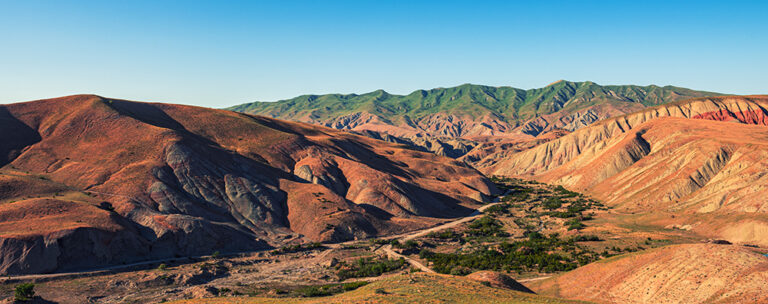
Western Bush Duiker hunting is geographically associated with the wooded savannas and scrub habitats of West Africa.
The broader Common Duiker species occupies an extensive range across sub-Saharan Africa, but different geographic forms are traditionally recognized within that distribution.
For international trophy collectors, this distinction is important. The presence of a bush duiker within a country does not necessarily establish that the animal qualifies for the Western Bush Duiker category.
Similarly, wildlife distribution should not be confused with the availability of an authorized hunting opportunity.
Cameroon is an important destination for hunters interested in specialized West and Central African antelope.
The northern portions of the country contain extensive savanna woodland, scattered thickets, and grassy clearings that provide suitable habitat for bush duikers.
These environments differ considerably from the dense equatorial forests of southern Cameroon, where other duiker species are more characteristic.
For Western Bush Duiker hunting, the relationship between wooded savanna, secondary vegetation, and open feeding areas is particularly important.
Animals may remain hidden within shrubs for much of the day, emerging briefly to feed or move between areas of cover.
Cameroon maintains a regulated hunting framework with designated hunting zones, professional operators, and species-specific requirements.
However, the availability of a Western Bush Duiker trophy must be verified according to the selected area, current regulations, and the classification standards of the intended trophy organization.
The Hunting Consortium helps clients evaluate these considerations as part of a broader approach to specialized African safari planning.
Benin, Togo, Ghana, Burkina Faso, and neighboring West African countries contain suitable environments for various bush duiker populations.
These regions include wooded grasslands, savanna thickets, woodland margins, and areas of secondary vegetation.
Historically, several geographic forms of the Common Duiker have been recognized across this portion of Africa.
For collectors, the exact geographic classification of an animal is therefore an important consideration.
Although some countries maintain regulated hunting programs, current access, harvest authorizations, and local population conditions differ substantially.
Any proposed Western Bush Duiker hunting opportunity must be established through an appropriately authorized professional operator.
Southern Chad and portions of the Central African Republic contain savanna habitats suitable for Common Duiker populations.
These areas form part of the broader transition between the drier northern grasslands and more heavily wooded environments farther south.
Depending on location, bush duikers may occupy scattered woodland, bushy slopes, grassy clearings, and vegetation associated with seasonal drainage systems.
However, the exact subspecies assignment of individual populations may be uncertain.
The presence of suitable habitat does not establish that a hunting program is available or advisable.
Current security conditions, wildlife regulations, and operator access require careful consideration before any international expedition is evaluated.
The historical literature recognizes different regional bush duiker populations across western Africa.
Some classifications associate coronata with areas around Senegal, Gambia, Guinea-Bissau, and Guinea, while campbelliae is associated with regions farther east, including portions of Mali, Ghana, Benin, Nigeria, Cameroon, and neighboring countries.
These traditional distinctions illustrate why Western Bush Duiker hunting requires more than a general understanding of the species’ broad distribution.
For serious trophy collectors, the accepted geographic definition of the intended category should be established before selecting a hunting area.
The Western Bush Duiker is primarily associated with wooded savanna, scrubland, and habitats containing sufficient vegetation for concealment.
Unlike many forest duikers that inhabit dense tropical rainforest, the Common Duiker generally prefers more open environments with scattered protective cover.
Its adaptability allows it to occupy a variety of landscapes, including woodland margins, secondary growth, and certain agricultural edges where vegetation remains available.
Wooded savanna provides the combination of feeding opportunities and shelter favored by Western Bush Duikers.
Scattered trees, shrubs, grasses, and irregular thickets create an environment in which animals can move between food sources while remaining close to protective vegetation.
These landscapes may appear relatively open from a distance, but local visibility can be restricted by dense undergrowth.
For hunters, the conditions can change considerably within a short distance.
Open grassland may give way to thorny scrub, tangled vegetation, or woodland margins where animals remain difficult to observe.
Western Bush Duikers may also utilize the edges of woodland and areas where vegetation has regenerated following disturbance.
Secondary growth often provides a combination of tender foliage, shrubs, and concealment.
However, bush duikers are not typically animals of the deepest closed-canopy rainforest.
That habitat is more strongly associated with several other duiker species, including forest-dwelling members of the genera Cephalophus and Philantomba.
This distinction is important when identifying suitable hunting areas and understanding the broader diversity of African duikers.
Western Bush Duikers are cautious animals whose behavior is strongly influenced by the availability of cover.
They are generally encountered alone or in pairs rather than in the large herds associated with many African plains game species.
Their small size and instinctive response to danger contribute to their elusive reputation.
Adult bush duikers commonly occupy familiar areas containing suitable feeding habitat and protective vegetation.
They may use established routes through thickets and woodland margins, although movement patterns vary with local environmental conditions.
When disturbed, the animal often escapes rapidly into dense cover.
This characteristic behavior gives the duiker group its common name.
For Western Bush Duiker hunting, locating an animal is only part of the challenge. The opportunity to observe it long enough for accurate identification may be extremely brief.
Western Bush Duikers consume a varied diet consisting primarily of leaves, shoots, herbs, fruits, seeds, and other available vegetation.
They may also utilize food resources associated with woodland edges and areas of secondary growth.
The composition of their diet changes according to season and habitat.
In some areas, bush duikers may feed near agricultural land where suitable vegetation remains available.
This adaptability contributes to the broad distribution of the Common Duiker species across Africa.
Bush duikers may be active during daylight or periods of reduced light, depending on local conditions.
Human disturbance, temperature, predators, and the distribution of food resources can influence their activity patterns.
In relatively undisturbed environments, animals may be observed feeding during daylight hours.
Elsewhere, they may become increasingly secretive and rely more heavily on protective vegetation.
Experienced local guides understand the importance of assessing the behavior of animals within a particular hunting territory rather than assuming every population follows identical patterns.
Western Bush Duiker hunting differs from many conventional African plains game pursuits because of the animal’s limited size, preference for protective vegetation, and subtle trophy characteristics.
Unlike large antelope that can sometimes be evaluated across broad open landscapes, a bush duiker may remain partially concealed within dense shrubs.
Its slender horns can also be difficult to distinguish against branches and surrounding vegetation.
For serious sportsmen, the pursuit rewards patience, careful observation, and the expertise of a professional hunter familiar with small African antelope.
A mature Western Bush Duiker may occupy a relatively small area containing suitable food and cover.
However, the animal’s secretive behavior can make direct encounters unpredictable and make Western Bush Duiker hunting a unique challenge.
Even where bush duikers are locally common, their presence may be revealed more frequently by brief movement or subtle signs than by extended observation.
Identifying an appropriate mature male requires careful attention to horn development and the animal’s appearance.
The Hunting Consortium emphasizes realistic trophy expectations and the importance of positive identification before any authorized hunting opportunity is pursued.
The vegetation favored by Western Bush Duikers creates distinctive conditions for field observation.
Animals may emerge from protective cover only briefly before returning to dense thickets.
In such environments, visibility may be limited and opportunities can develop quickly.
Responsible hunting requires restraint, patience, and appropriate professional judgment.
The objective is not to force a hurried opportunity but to evaluate the animal and surrounding conditions carefully.
Where legally authorized, Western Bush Duiker hunting generally involves careful observation, traditional stalking, and the interpretation of animal signs by experienced local professionals.
The methods used depend on the selected hunting territory, vegetation, prevailing conditions, and applicable regulations.
Tracking may provide useful information about the recent movements of bush duikers within suitable habitat.
Experienced trackers interpret hoofprints, feeding signs, and other evidence to understand where animals have traveled.
However, the small size of the animal and the presence of other antelope can complicate identification.
Professional guides combine spoor interpretation with knowledge of local vegetation, feeding conditions, and established animal movements.
Spot-and-stalk hunting may be appropriate where Western Bush Duikers move between thickets and more open feeding areas.
Experienced professional hunters observe suitable habitat while remaining alert to brief opportunities for identification.
Once an appropriate animal has been located, the surrounding conditions must be assessed before determining whether a responsible approach is possible.
Because duikers are small and may move rapidly into protective vegetation, careful judgment is essential.
In certain hunting areas, prolonged observation of woodland edges, secondary growth, and natural openings may provide opportunities to encounter bush duikers.
However, the animal’s behavior remains influenced by local conditions and disturbance.
Experienced professional hunters understand that a suitable habitat does not guarantee a predictable encounter.
Patience and familiarity with the landscape are central to Western Bush Duiker hunting.
For international trophy collectors, Western Bush Duiker hunting is distinguished by the need for accurate identification and careful assessment of relatively small horns.
A mature male typically possesses slender, pointed horns with modest overall dimensions compared with larger African antelope.
Because the animal’s size and horn characteristics differ significantly from those of major plains game species, realistic expectations are important.
The geographic origin of the trophy may also be essential when confirming eligibility for a particular record-book category.
The Hunting Consortium helps clients understand these distinctions and evaluate the appropriate classification before pursuing a specialized duiker objective.
The appropriate season for Western Bush Duiker hunting depends on the selected country, authorized hunting area, and applicable wildlife regulations.
Seasonal rainfall influences vegetation density, ground conditions, and the distribution of available food resources.
In portions of West and Central Africa, dry-season conditions may improve access to remote hunting territories.
However, bush duikers may continue using dense vegetation throughout the year.
Consequently, seasonal accessibility should not be confused with guaranteed hunting success.
Hunters should select dates according to current legal authorization and the recommendations of the experienced local professional operator.
Preparation for Western Bush Duiker hunting should reflect the climate, terrain, and practical demands of the selected destination.
Although the animal is small, the environments it occupies can involve thick vegetation, uneven ground, warm conditions, and extended periods of patient observation.
Hunters should be comfortable walking through woodland and scrubland while maintaining concentration during extended periods outdoors.
The physical requirements vary according to the hunting territory and the methods employed by the professional operator.
Western Bush Duiker hunting does not necessarily demand the same endurance associated with mountain sheep expeditions, but the pursuit can require careful movement through difficult vegetation.
Dependable footwear, breathable clothing, appropriate sun protection, and suitable equipment for changing weather conditions are important considerations.
Quality binoculars can assist with identifying small antelope in woodland and evaluating individual animals.
Firearm and ammunition arrangements should be discussed with the professional hunter to ensure suitability for a small-bodied antelope and compliance with local law.
Because the species is comparatively small, careful shot placement and reliable equipment are especially important.
International hunting expeditions in West and Central Africa may require coordination of hunting permits, professional guides, accommodations, transportation, firearm documentation, and trophy export arrangements.
Requirements vary substantially between countries and hunting territories.
Regional security, infrastructure, seasonal road access, and the availability of experienced professional support must also be considered.
The Hunting Consortium helps clients evaluate these requirements before recommending a suitable hunting opportunity.
The Common Duiker, Sylvicapra grimmia, is classified as Least Concern by the International Union for Conservation of Nature.
This classification reflects the species’ broad distribution and capacity to occupy a variety of habitats across sub-Saharan Africa.
However, the global conservation status of the species does not establish that every regional population is abundant or suitable for harvest.
Local populations may be affected by habitat change, uncontrolled hunting, agricultural expansion, and other environmental pressures.
Wooded savanna, shrubland, and areas of secondary vegetation provide important habitat for Western Bush Duikers.
These environments support numerous other small antelope, birds, and wildlife species.
Appropriate habitat management should account for the availability of protective cover and suitable feeding areas.
The maintenance of woodland and scrubland habitats is therefore important to the long-term condition of local duiker populations.
Where Western Bush Duiker hunting is legally authorized, responsible harvesting requires compliance with current permits, species restrictions, seasons, and local wildlife-management requirements.
Positive identification and careful evaluation of individual animals remain essential.
Regulated hunting may contribute to local economic activity and wildlife management where effective systems are established.
However, conservation benefits should be demonstrated through documented practices rather than assumed.
The Hunting Consortium recognizes that ethical hunting depends on legal compliance, experienced professional judgment, and respect for wildlife and habitat.
Western Bush Duiker hunting may be considered as part of a broader safari focused on specialized West and Central African game.
Depending on the selected hunting territory, additional authorized opportunities may involve other small antelope, bushbuck, reedbuck, hartebeest, or regionally appropriate plains game species.
However, each species has its own distribution, habitat preferences, and regulatory requirements.
The presence of several species within a country does not establish that they are available in the same hunting area.
The Hunting Consortium helps clients evaluate realistic species combinations while maintaining a clear focus on the principal objectives of the safari.
The Hunting Consortium has decades of experience helping serious sportsmen pursue specialized international hunting opportunities.
Our approach emphasizes informed destination selection, experienced professional relationships, accurate trophy classification, and careful logistical planning.
For Western Bush Duiker hunting, these considerations include the geographic identity of the animal, the condition of the local population, the availability of appropriate authorization, and the experience of the professional hunting team.
We recognize that pursuing a specialized African antelope requires more than identifying a country where the species occurs.
It requires understanding the animal’s behavior, evaluating suitable habitat, confirming applicable regulations, and selecting professionals familiar with the realities of hunting in difficult environments.
Our advisors help clients assess these considerations and identify opportunities consistent with their individual objectives.
Western Bush Duiker hunting represents a specialized pursuit of one of Africa’s most elusive small antelope.
The animal’s compact build, slender horns, distinctive facial markings, and preference for protective vegetation make it a challenging and rewarding trophy for serious collectors.
Across the wooded savannas and thickets of West Africa, these animals occupy environments where patience, observation, and experienced professional guidance are essential.
The Hunting Consortium provides trusted guidance in understanding Western Bush Duiker classifications, evaluating authorized hunting destinations, and coordinating the practical requirements of professionally organized African safaris.
Contact The Hunting Consortium to discuss Western Bush Duiker hunting, recognized trophy classifications, current authorized opportunities, and the professional guidance necessary to plan your next African hunting safari.
"*" indicates required fields