Tatra Chamois hunting occupies a distinctive place in the history of European mountain hunting, although the animal itself is now strictly protected throughout its native range. Found in the rugged Tatra Mountains along the border of Poland and Slovakia, the Tatra Chamois (Rupicapra rupicapra tatrica) represents one of Europe’s most geographically restricted mountain ungulates and an important example of alpine wildlife conservation.
For serious international sportsmen, Tatra Chamois hunting requires an appreciation of both the animal’s remarkable adaptation to high mountain terrain and the conservation measures protecting its remaining populations. Its home consists of steep granite ridges, alpine grasslands, exposed slopes, and rocky escarpments where few large mammals can survive throughout the year.
Historically, Tatra chamois hunting was pursued across Europe’s mountain ranges and became firmly established within the traditions of continental mountain hunting. Today, however, the Tatra subspecies is legally protected in both countries where it naturally occurs. Recreational Tatra Chamois hunting is not authorized in Poland or Slovakia.
This distinction is particularly important for international trophy collectors. Although regulated hunting for other chamois subspecies remains available in parts of Europe, those animals must not be confused with the protected Tatra Chamois.
The Hunting Consortium brings decades of international hunting experience to the evaluation of specialized tatra chamois hunting and mountain expedition opportunities. Our advisors help clients understand geographic trophy classifications, assess current hunting regulations, and identify appropriate destinations for legally authorized pursuits.
The Tatra Chamois is a geographically distinctive subspecies of the Northern Chamois, Rupicapra rupicapra.
It was formally described as a separate subspecies in 1972 by Polish zoologist Mieczysław Blahout, reflecting differences identified between the animals of the Tatra Mountains and other European chamois populations.
Its scientific classification, Rupicapra rupicapra tatrica, recognizes the evolutionary and geographic distinctiveness of the population.
The Tatra Chamois is especially significant because it survives naturally within a relatively small and isolated mountain system. Unlike more widely distributed Alpine Chamois populations, these animals have limited opportunities for natural movement between separate mountain ranges.
This isolation has contributed to the development of the subspecies’ distinctive characteristics while also increasing the importance of protecting its habitat and genetic identity.
The Tatra Chamois is a compact, powerful mountain ungulate with a short body, strong legs, and specialized hooves adapted to rocky terrain.
Adults typically weigh several dozen pounds, with mature males generally heavier than females. Size varies according to age, sex, season, and available nutrition.
The coat changes significantly throughout the year.
During warmer months, the animals generally display a lighter brown or reddish-brown coat. As winter approaches, the coat becomes considerably darker and develops greater density, providing protection against low temperatures and severe mountain weather.
Distinctive facial markings include contrasting light and dark areas extending across the head.
The white coloration around the muzzle and portions of the face provides a recognizable contrast with the darker markings surrounding the eyes.
Although the Tatra Chamois shares many characteristics with other European chamois, its geographic origin and recognized subspecies classification distinguish it from the Alpine form.
Both male and female chamois develop horns.
These horns rise almost vertically from the head before curving sharply backward near their tips, producing the distinctive hooked configuration associated with the species.
Unlike the annually shed antlers of deer, chamois horns are permanent structures that continue developing throughout the animal’s life.
Growth is typically more pronounced during the animal’s earlier years and gradually slows with maturity.
In hunting populations of other chamois subspecies, trophy evaluation may consider horn length, height, circumference, symmetry, and other characteristics according to the applicable measurement system.
However, the protected status of the Tatra Chamois means that these characteristics are relevant primarily to biological research, historical specimens, and comparative trophy classification rather than contemporary recreational hunting.
The native distribution of the Tatra Chamois is restricted to the Tatra Mountains, which form part of the Western Carpathian mountain system along the border between Poland and Slovakia.
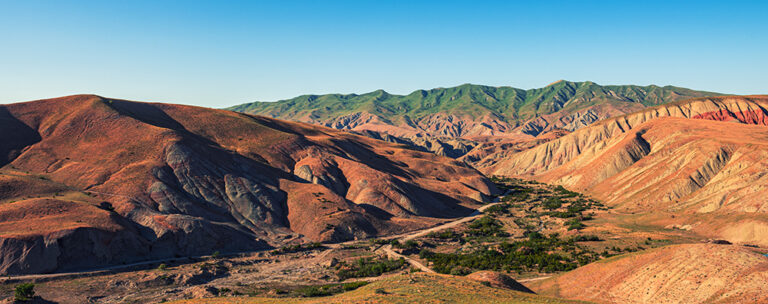
The mountain range contains some of the highest peaks in the Carpathians and is characterized by steep rocky slopes, glacial valleys, alpine meadows, and exposed ridgelines.
These landscapes provide the specialized habitat required by the subspecies.
Both countries protect their respective portions of the natural population through national parks and wildlife conservation legislation.
The Polish portion of the Tatra Mountains forms part of Tatra National Park, known locally as Tatrzański Park Narodowy.
The national park protects an extensive area of mountain ecosystems, including forests, alpine grasslands, rocky slopes, and high-elevation habitats.
Tatra Chamois inhabit suitable areas above and around the upper forest boundary, where steep terrain provides access to feeding areas and protection from predators.
Poland has a long history of protecting these animals, and contemporary recreational hunting of the Tatra Chamois is prohibited.
For sportsmen interested in the natural history of European mountain game, the Polish Tatras offer an opportunity to observe a rare and highly specialized subspecies within its protected native habitat.
Wildlife observation must comply with national park regulations, including requirements concerning designated trails, seasonal closures, and disturbance of protected animals.
The Slovak portion of the Tatra Mountains contains much of the native Tatra Chamois habitat.
These mountain landscapes are protected principally through Tatra National Park, known as TANAP.
The Slovak Tatras include extensive rocky ridges, alpine basins, mountain valleys, and slopes rising well above the tree line.
The combination of high elevation and steep terrain creates the specialized environment on which the Tatra Chamois depends.
Like Poland, Slovakia provides strict legal protection for the native Tatra Chamois population.
Tatra Chamois hunting is not legally available in Slovakia under ordinary recreational hunting arrangements.
Although Slovakia permits regulated hunting of certain other chamois populations, those animals belong to a different subspecies and must be identified accordingly.
In addition to its native range, the Tatra Chamois has an introduced population in the Low Tatras of Slovakia.
This population originated from conservation-related translocations intended to establish an additional population outside the original Tatra range.
The Low Tatras contain suitable alpine and subalpine habitats, including rocky mountain slopes and open high-elevation terrain.
However, the presence of this introduced Tatra Chamois population does not make the subspecies available for recreational hunting.
The protected Tatra Chamois must also be distinguished from introduced Alpine Chamois populations found in other Slovak mountain areas.
One of the most important considerations for anyone researching Tatra Chamois hunting is the distinction between historical hunting traditions and current wildlife regulations.
The Tatra Chamois is a strictly protected subspecies in both Poland and Slovakia.
Its native population occupies protected mountain environments where recreational hunting is prohibited.
Consequently, an operator advertising a conventional Tatra Chamois trophy hunt should be approached with particular caution.
The fact that chamois hunting is legal elsewhere in Europe does not establish that the Tatra subspecies may be hunted.
The Alpine Chamois, traditionally classified as Rupicapra rupicapra rupicapra, is a separate geographic form of the Northern Chamois.
It occurs naturally across portions of the European Alps and has also been introduced to selected mountain regions outside its original range.
In Slovakia, certain introduced Alpine Chamois populations have historically been subject to regulated hunting.
These opportunities are geographically restricted and governed by national wildlife regulations.
They must not be represented as hunts for the protected Tatra Chamois.
For international trophy collectors, the correct subspecies identification can be important when submitting a trophy to a record-keeping organization.
Chamois are recognized within several international trophy-record systems, and geographic classifications may influence how an individual specimen is recorded.
The distinction between Alpine Chamois, Balkan Chamois, Carpathian Chamois, and Tatra Chamois is therefore more than a matter of common names.
Each classification refers to animals associated with particular geographic populations and taxonomic traditions.
For hunters pursuing specific European mountain trophies, accurate documentation of the species, subspecies, and hunting location is essential.
The Hunting Consortium places considerable importance on verifying these distinctions before recommending a hunting destination.
The Tatra Chamois is notable for its restricted distribution, remarkable adaptation to high mountain terrain, and importance within European wildlife conservation.
Unlike many mountain ungulates capable of occupying extensive interconnected ranges, the natural Tatra population is isolated within a comparatively small mountain system.
The animals remain closely associated with alpine and subalpine habitats throughout the year.
This relationship with high-elevation environments has made the Tatra Chamois particularly interesting to researchers studying mountain ecology, wildlife behavior, and population conservation.
Tatra Chamois spend much of their lives in the open mountain environments above the principal forest zone.
These habitats include alpine meadows, rocky slopes, dwarf-pine margins, and areas of broken stone.
Unlike some other European chamois populations that make substantial seasonal movements into lower forest habitats, the Tatra form generally remains within high-elevation environments throughout the year.
This behavior reflects the unusual characteristics of the Tatra Mountains and the limited geographic range available to the animals.
The ability of chamois to navigate steep mountain slopes is one of their most recognizable characteristics.
Strong legs, specialized hooves, and exceptional balance allow the animals to move across difficult rock formations with remarkable efficiency.
They can negotiate narrow ledges, steep gullies, and unstable slopes that present substantial challenges to human movement.
This agility provides important protection against predators and allows access to vegetation growing in exposed locations.
For experienced mountain hunters, these characteristics illustrate why chamois have historically occupied a distinguished place within European hunting traditions.
Tatra Chamois live in social groups whose composition varies according to age, sex, season, and reproductive activity.
Females and younger animals frequently associate in herds, while mature males may remain more solitary during portions of the year.
As the breeding season approaches, social interactions can become more pronounced.
The Tatra Chamois feeds on alpine vegetation, including grasses, sedges, herbs, and other available plant material.
The composition of its diet varies according to seasonal conditions and the vegetation present within its habitat.
During warmer months, alpine grasslands provide important feeding opportunities.
In winter, snow cover can restrict access to vegetation, requiring animals to utilize exposed slopes and other areas where forage remains available.
These seasonal constraints contribute to the challenges associated with survival in high mountain environments.
The chamois breeding period generally occurs during autumn, when mature males become more active in seeking receptive females.
Interactions between males may include displays, pursuit, and competitive behavior.
The timing and intensity of these activities can vary according to environmental conditions.
Females typically give birth in spring or early summer, when improving weather and vegetation growth provide more favorable conditions for young animals.
The survival of newborn kids can be influenced by severe weather and the availability of suitable shelter.
Tatra Chamois face several natural threats within their mountain environment.
Predators may include wolves, lynx, and golden eagles, depending on the location and vulnerability of individual animals.
Severe weather also presents important challenges.
Snow avalanches, falling rock, prolonged rainfall, extreme cold, and late spring storms can affect survival.
These environmental pressures are particularly significant for an animal whose population is concentrated within a geographically restricted mountain range.
Conservation is central to understanding the present status of the Tatra Chamois.
The subspecies is protected through national legislation and international wildlife conservation frameworks.
Its restricted distribution, relative isolation, and sensitivity to environmental change make continued population monitoring especially important.
Polish and Slovak conservation authorities have cooperated in monitoring Tatra Chamois populations for decades.
Population surveys are generally conducted during spring and autumn.
The spring census helps researchers assess reproductive success and the number of young animals surviving their earliest weeks.
Autumn surveys provide information about the broader population before winter.
Because the animals move freely across the international border, coordinated monitoring provides a more useful picture of the population than treating the Polish and Slovak groups as completely separate populations.
The Tatra Chamois population has experienced substantial fluctuations over time.
Official monitoring has recorded periods of population growth as well as declines associated with environmental pressures and other factors.
A spring 2026 census reported 786 chamois across the Tatra range, including 335 animals on the Polish side.
The survey also recorded 95 young animals, providing information about recent reproduction.
Population counts should be understood as estimates influenced by observation conditions, animal movements, and the timing of surveys.
Continued monitoring remains essential because the subspecies occupies a restricted and environmentally demanding habitat.
The Tatra Mountains are among the most visited mountain destinations in Central Europe.
Hiking, climbing, skiing, and other recreational activities bring substantial numbers of visitors into alpine environments.
Although regulated tourism provides economic benefits to surrounding communities, human disturbance can influence wildlife behavior and habitat use.
Conservation authorities therefore maintain restrictions intended to limit disturbance in sensitive areas.
For Tatra Chamois, protecting suitable habitat is an important part of preserving the population’s long-term stability.
Although recreational Tatra Chamois hunting is prohibited, experienced international sportsmen can pursue other chamois subspecies through properly authorized hunting programs elsewhere in Europe.
These opportunities retain many of the characteristics traditionally associated with chamois hunting, including steep mountain terrain, challenging physical conditions, and the pursuit of a compact, agile mountain ungulate.
The most appropriate alternative depends on the hunter’s trophy objectives, preferred destination, physical capabilities, and the requirements of the relevant record organization.
Alpine Chamois hunting is an established European mountain hunting pursuit.
The species occurs across portions of the Alps, including Austria, Switzerland, Italy, France, and neighboring mountain regions.
Regulated opportunities may be available according to national regulations, local hunting permits, and the management policies of individual hunting areas.
Alpine Chamois occupy steep rocky slopes, mountain forests, and alpine meadows where traditional stalking and careful observation remain important.
For sportsmen whose principal interest is the experience of chamois hunting in demanding European terrain, the Alpine Chamois provides a legitimate alternative to the protected Tatra subspecies.
Slovakia is particularly relevant because both native Tatra Chamois and introduced Alpine Chamois populations occur within the country.
Slovak regulations distinguish between these populations.
The native Tatra Chamois remains strictly protected, while hunting of certain introduced Alpine Chamois populations may be authorized in designated areas.
Hunters considering Slovakia must confirm the subspecies, hunting location, applicable permits, and current legal authorization before arranging an expedition.
A trophy taken from a legally hunted Alpine Chamois population should not be described or recorded as a Tatra Chamois.
Depending on the destination, hunters may also consider opportunities involving Balkan Chamois, Carpathian Chamois, or other recognized European mountain game.
These pursuits differ in habitat, geographic distribution, trophy characteristics, and legal requirements.
Some take place in high alpine terrain, while others involve forested mountains, broken limestone ridges, or more extensive mountain systems.
The Hunting Consortium helps clients evaluate appropriate destinations according to their individual objectives and the standards of the relevant trophy-record organizations.
For hunters considering a legally authorized alternative to Tatra Chamois hunting, physical preparation is an important part of the planning process.
European chamois commonly occupy steep and uneven mountain environments where travel can involve extended climbing, rocky slopes, and changing weather.
The physical demands of an individual hunt vary according to the destination, elevation, and accessibility of the selected hunting area.
Hunters should be comfortable walking over uneven ground and maintaining concentration during extended periods outdoors.
Appropriate cardiovascular conditioning, leg strength, and familiarity with uphill movement can improve comfort during a demanding mountain expedition.
However, not every European chamois hunt requires the same level of physical exertion.
The Hunting Consortium recommends selecting an opportunity suited to the hunter’s abilities, experience, and expectations.
Dependable mountain footwear, layered clothing, waterproof protection, and suitable cold-weather equipment are important considerations.
Quality binoculars and spotting optics can assist with observing chamois across mountain slopes and evaluating mature animals.
Firearm and ammunition arrangements should be discussed with the professional hunting operator to ensure compliance with local regulations and suitability for the intended species.
Responsible preparation also requires understanding the terrain and environmental conditions associated with the selected destination.
European mountain hunting expeditions may require coordination of hunting permits, professional guides, accommodations, transportation, firearm documentation, and trophy export procedures.
Requirements vary considerably between countries and individual hunting territories.
The Hunting Consortium helps clients evaluate these arrangements and coordinate the practical requirements of a properly authorized mountain hunting expedition.
The Hunting Consortium has decades of experience helping serious sportsmen pursue specialized international hunting opportunities.
Our approach emphasizes informed destination selection, accurate trophy classification, experienced professional relationships, and careful logistical planning.
For hunters researching Tatra Chamois hunting, an essential part of responsible guidance is recognizing that the protected Tatra subspecies is not available for recreational hunting.
We believe that accurate information about wildlife conservation and hunting regulations is fundamental to the trust our clients place in us.
Where appropriate, our advisors can help identify legally available European chamois opportunities that reflect the hunter’s individual objectives and preferred mountain hunting experience.
The Tatra Chamois represents one of Europe’s most distinctive mountain ungulates, a rare subspecies whose survival depends on continued protection of its alpine habitat.
Although Tatra Chamois hunting is prohibited in Poland and Slovakia, the animal remains an important part of European mountain hunting history and wildlife conservation.
For serious sportsmen interested in pursuing chamois, other recognized subspecies offer legitimate opportunities in challenging mountain environments across Europe.
The Hunting Consortium provides experienced guidance in understanding trophy classifications, evaluating authorized hunting destinations, and coordinating the practical details of specialized international expeditions.
Contact The Hunting Consortium to discuss legally available European chamois hunting opportunities, trophy objectives, and the professional guidance necessary to plan an appropriate mountain hunting expedition.
"*" indicates required fields