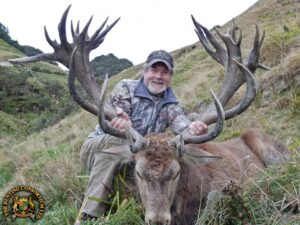
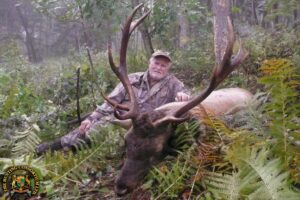
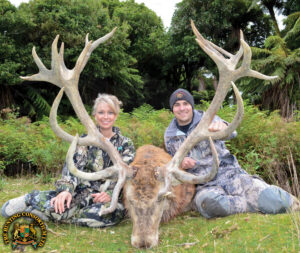
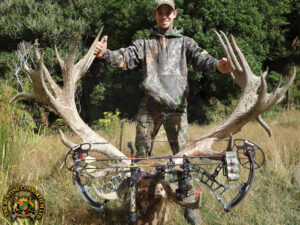
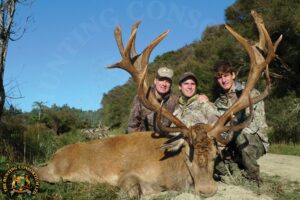
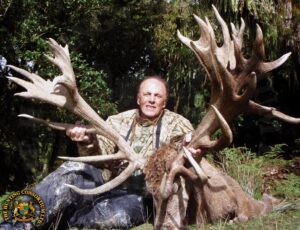
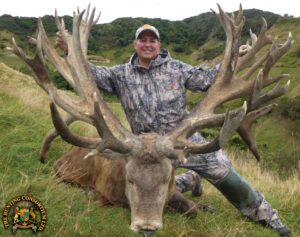
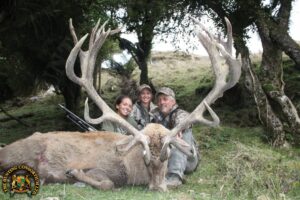
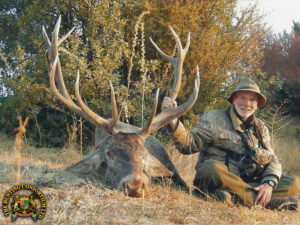
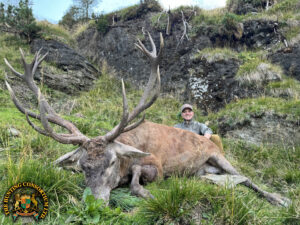
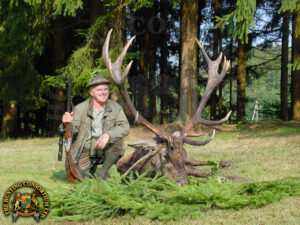
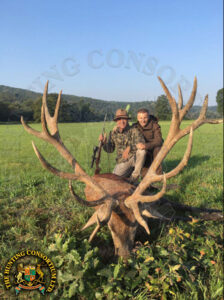
Red Stag Hunting

Table of Contents
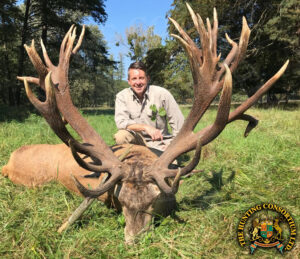
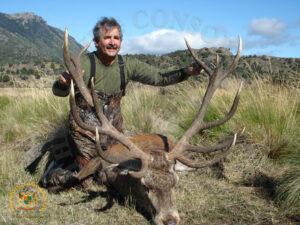
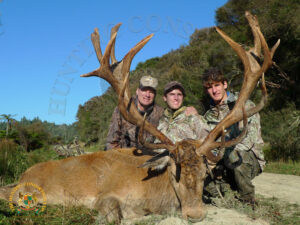
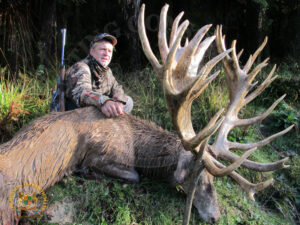
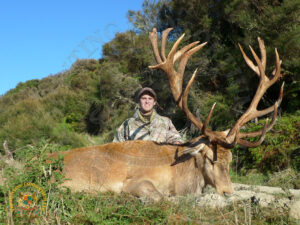
There are few sounds in hunting quite like the call of a mature red stag.
Across a misted European forest or a New Zealand valley in autumn, that unmistakable challenge changes the character of a hunt. Stags become vocal and territorial. The country comes alive. A pursuit that already carries centuries of sporting tradition takes on an urgency all its own.
For serious international hunters, red stag remains one of the great sporting trophies of the world. But deciding to hunt red stag is only the beginning.
Europe and New Zealand offer very different interpretations of the pursuit. Within those destinations, the distinctions continue: free-range country and carefully managed estates, mountain terrain and more accessible ground, traditional European stalking and the particular character of New Zealand’s roar.
There is no single “best” red stag hunt.
There is a red stag hunt that is better suited to a particular hunter, his expectations, his preferred style of hunting, his physical abilities, and what he wants the experience to mean.
The Hunting Consortium has spent decades helping serious sportsmen make precisely those distinctions. Our role is not simply to find a place where red stag can be hunted. It is to understand the hunter first, then identify the opportunity that deserves his time, preparation, and trust.

The Enduring Appeal of Red Stag Hunting
Red stag occupies an unusual place in international hunting.
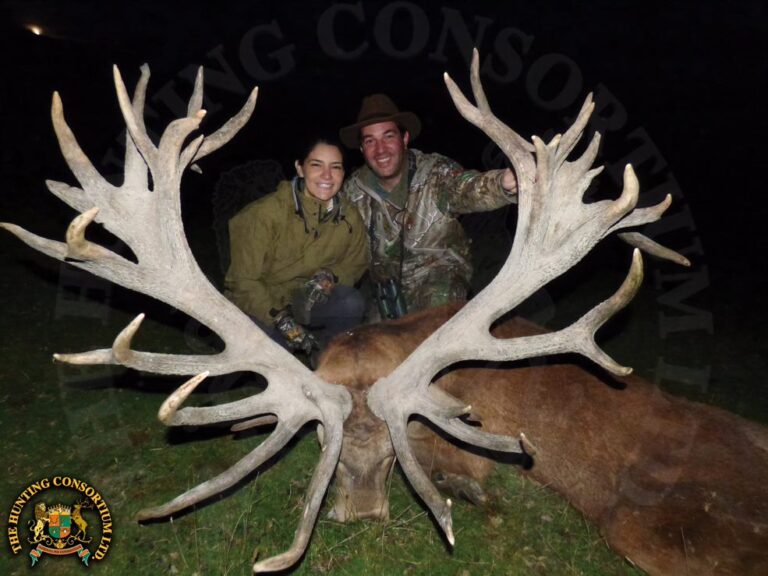
Part of that appeal is physical. A mature stag is an imposing animal, carrying antlers with individual character and a presence that commands attention at close range. But the significance of the pursuit goes considerably deeper.
In Europe, red deer hunting is intertwined with centuries of sporting tradition and wildlife management. Customs surrounding the hunt, the country in which it takes place, and the respect shown to the animal remain an important part of the experience.
Then there is the roar.
Hunting during the rut puts the sportsman into the middle of one of the most distinctive periods in the red deer’s year. A stag that might otherwise disappear quietly into timber can announce himself across a valley. Rival animals answer. Guides use sound, terrain, wind, and intimate knowledge of the ground to determine where a mature stag may be holding.
It is a hunt that can be both deliberate and suddenly intense.
Red deer have also established themselves far beyond their European origins, most notably in New Zealand, where the species has developed into one of the country’s defining big-game pursuits.
That international range gives today’s hunter choices earlier generations did not have. It also makes experienced advice more valuable.
The question is no longer simply where can I hunt red stag?
It is what kind of red stag hunt am I looking for?


Where Should You Hunt Red Stag?
For most hunters speaking with The Hunting Consortium, two broad directions deserve particular consideration: Europe and New Zealand.
Both can provide outstanding red stag hunting. They should not, however, be treated as interchangeable.
European Red Stag Hunting
Europe is where the history of red stag hunting is deepest.
Austria, Hungary, Romania and other European destinations offer variations on a tradition shaped over generations. Depending upon the country and hunting area, the experience may take place in mountain forests, agricultural country, broad woodland, free-ranging habitat, or carefully managed estates.
The atmosphere can be as important as the landscape.
During the rut, mornings and evenings may be spent listening for roaring stags and working carefully into position. Calling can become part of the hunt. Local hunting customs remain meaningful, and experienced professional hunters often possess knowledge of their ground accumulated over many seasons.
Europe also gives the hunter considerable choice.
For one sportsman, the priority may be pursuing a genuinely wild, free-ranging stag in difficult country. Another may value a traditional estate environment with carefully managed game. Some want the cultural experience surrounding an established European sporting tradition. Others want to combine red stag with additional European species where seasons, geography, and regulations make that practical.
Those differences matter.
The Hunting Consortium’s European relationships and regional experience allow us to look beyond a country name and consider the individual hunting area, people involved, management history, terrain, timing, and expectations of the hunter.
For a deeper look at the traditional European pursuit, explore our European Red Stag Hunting page.
Red Stag Hunting in New Zealand
New Zealand presents an entirely different proposition.
Red deer were introduced to the country in the nineteenth century and have since become inseparable from New Zealand’s hunting identity. Today, the country is internationally recognized for red stag hunting and offers a remarkably broad spectrum of experiences.
A hunter may pursue stag in rugged country where physical conditioning and the ability to cover ground become important parts of the hunt. Other opportunities can be considerably more accessible. Depending upon the area and the hunter’s priorities, both free-range and intensively managed private-land opportunities may be considered.
That range is one of New Zealand’s strengths—but it is also why the words “New Zealand red stag hunt” do not describe a single experience.
Trophy objectives, hunting environment, physical expectations, management philosophy, and the character of the property all need to be understood before the right recommendation can be made.
New Zealand also offers the advantage of a Southern Hemisphere hunting season. The roar generally occurs during March and April, creating a red stag opportunity at a very different point in the calendar from Europe’s autumn rut.
The Hunting Consortium has been arranging hunting in New Zealand for decades and has longstanding relationships within the country’s professional hunting community.
For more detail, continue to Red Stag Hunting in New Zealand, or explore the broader New Zealand Hunting destination page for other species and considerations.


European Red Stag or New Zealand Red Stag?
A hunter deciding between Europe and New Zealand is not simply choosing between two places on a map. He is choosing between different hunting traditions, seasons, landscapes, and types of opportunity.
| Consideration | Europe | New Zealand |
|---|---|---|
| Character | Deep European hunting tradition and culture | Distinctive Southern Hemisphere hunting tradition |
| Roar | Autumn, generally centered around September and October depending on country and conditions | Generally March and April |
| Terrain | Varies from forests and agricultural ground to foothills and mountain country | Ranges from accessible private land to rugged hill and alpine country |
| Hunt structure | Free-range and estate opportunities depending on destination | Free-range and managed/private-land opportunities |
| Trophy priorities | Strong opportunities with substantial variation by country and area | International reputation for exceptional trophy-oriented opportunities |
| Physical demands | Can range considerably by region and hunting area | Can be tailored from demanding country to more accessible situations |
| Tradition | Often a defining part of the experience | Less formal European tradition; strong New Zealand hunting identity |
| Other species | Potential combinations vary widely by country | Potential combinations may include tahr, chamois and other New Zealand game |
| Best suited to | Hunters drawn to European sporting culture, traditional stalking, and varied free-range or estate options | Hunters attracted to New Zealand, Southern Hemisphere timing, varied terrain, and a broad range of trophy objectives |
Neither column is inherently better.
A hunter whose priority is an old-world sporting tradition and the atmosphere of a European forest during the rut may naturally gravitate toward Europe. A hunter whose priorities center on New Zealand, a different seasonal window, or particular trophy and terrain objectives may find the South Pacific the stronger fit.
And there are hunters for whom the answer is less obvious.
Those are often the conversations where an experienced international hunting advisor provides the greatest value.
Free-Range, Estate and Managed Red Stag Hunting
Few distinctions in red stag hunting require more honest discussion than the environment in which the stag is pursued.
“Free-range” matters greatly to many hunters. They want a wild stag living without enclosure, and they accept the uncertainty, physical demands, and variables that accompany that objective.
That is a legitimate priority.
It is not every hunter’s priority.
Europe has a long tradition of hunting on large estates, some of which have been managed for game over generations. New Zealand likewise encompasses a spectrum ranging from wild free-ranging deer to private properties managed with trophy quality as an important objective.
Those experiences should not be blurred together.
A hunter should understand what he is pursuing, where he will pursue it, how the population is managed, how physically demanding the hunt is likely to be, and what degree of control exists over the variables that influence the hunt.
Some sportsmen want uncertainty and difficult country to be central to the experience. Others place greater emphasis on trophy potential. Age, mobility, available time, previous hunting experience, or the desire to travel with a spouse can also influence what makes sense.
There is no benefit in steering every hunter toward the same answer.
There is considerable benefit in asking the right questions before recommending one.
That is the difference between presenting red stag hunts and advising a hunter about red stag hunting.
What Makes a Great Red Stag Hunt?
A compelling photograph can advertise a red stag hunt.
It cannot tell you whether the opportunity is right for you.
When The Hunting Consortium evaluates a red stag program, we look beyond the existence of good stags. We consider the hunting area itself, its management, the people responsible for it, hunting pressure, the consistency of past execution, the quality of guiding, terrain, seasonal timing, physical requirements, accommodations where relevant, and the logistics required to put the entire journey together properly.
Just as importantly, we consider the hunter.
What does he actually want from the hunt?
Is the priority a wild stag in difficult country? The atmosphere of the roar? European tradition? A particular level of physical challenge? Strong trophy potential? A New Zealand hunt combined with tahr or chamois? A European itinerary involving additional species or time with family?
The right opportunity begins to emerge only when those questions have honest answers.
Experienced wildlife management also matters. Responsible hunting and long-term trophy quality depend upon healthy populations, sound management practices, appropriate harvest, and people with a continuing interest in the land and its wildlife.
For THC, stewardship is not separate from judging a hunting program. It is part of determining whether that program deserves a client’s confidence.
Access to red stag hunting is not particularly difficult to advertise.
Knowing which opportunity deserves a serious hunter’s time and trust is a different matter.
Red Stag Hunting During the Roar
The roar is one of the principal reasons many experienced hunters choose red stag.
As the rut approaches, the behavior of mature stags changes. Vocal activity increases. Stags establish and defend breeding groups, answer rivals, and reveal their presence in ways they may not during quieter portions of the season.
The result is a hunt shaped as much by listening as looking.
A distant roar can give a guide the first indication of where a stag is holding. Another response helps establish direction. Wind and terrain determine the approach. In some circumstances, calling can draw a reaction and change the situation quickly.
Yet the roar is never completely predictable.
Weather, local conditions, timing, hunting pressure, elevation, and the behavior of individual animals all affect what takes place. Experienced local judgment remains critical.
Europe’s roar occurs in the Northern Hemisphere autumn, with timing varying by country and region. In New Zealand, the corresponding period generally falls in March and April.
For hunters with a strong preference for hunting red stag during the rut, this difference creates two distinct seasonal windows—and another reason to begin with objectives rather than simply choosing a destination.
Why Plan Your Red Stag Hunt With The Hunting Consortium?
The internet has made it easy to find someone advertising a red stag hunt.
It has not made it easy to know which advice to trust.
The Hunting Consortium’s value lies in the distinction.
We advise across destinations rather than representing only one red stag property or one method of hunting. That gives us the ability to begin with the client’s objectives and work toward the appropriate opportunity instead of beginning with inventory that needs to be sold.
Our experience also extends beyond what happens in the field.
International hunting requires coordination: travel, firearms documentation, permits, entry requirements, transfers, local operators, accommodations, schedules, and contingency planning. The more consequential the hunt, the less room there is for assumptions.
That discipline has been built through decades of international hunting and travel.
In Europe, THC combines longstanding regional relationships with a team that includes German-language capability and practical familiarity with European hunting culture. Managing Director Robert K. Kern speaks German and brings more than two decades of experience in hunting travel logistics, client consultation, and international program development.
Rob also serves as Project Manager and Associate Producer of Wild Strongholds, a documentary project examining the relationship between regulated hunting, wildlife conservation, habitat, and rural communities.
The larger point is straightforward.
When a client asks us about red stag hunting, we do not have to make every opportunity sound right.
Our responsibility is to use experience, relationships, field knowledge, and careful planning to identify the opportunity that actually fits.
That is Wisdom From Experience in practical terms.
Trusted by Serious International Hunters
Repeat trust is one of the strongest measures of an advisor.
Jim Shockey has relied on The Hunting Consortium for more than 30 international hunts. His explanation of that relationship is particularly relevant:
“When I have a hunting; where, how, or what question, I call Bob or Rob Kern at the Hunting Consortium.“
The significance is not simply the number of hunts. It is the reason for the call: where, how, or what.
Those are questions of judgment.
Craig Boddington makes an equally important distinction in describing THC. After decades of international hunting himself, he differentiates between ordinary booking agents and experienced, full-time hunting consultants with people on the ground in difficult destinations.
Speaking of challenging hunts, his conclusion is concise:
“I have complete faith in The Hunting Consortium.”
That confidence was earned through planning, preparation, regional relationships, and execution over many years.
For the serious sportsman considering red stag, that is the standard that matters.
Start Planning the Right Red Stag Hunt
A red stag hunt should not begin with a package.
It should begin with a conversation.
Tell us what matters to you: Europe or New Zealand, if you already have a preference; free-range or managed; the importance of the roar; the level of physical challenge you want; your trophy priorities; your preferred timing; other species you may wish to pursue; and any travel considerations that will shape the experience.
If you do not yet know which direction makes the most sense, that is precisely where experienced advice becomes useful.
The Hunting Consortium will help you understand the differences, set realistic expectations, and identify the red stag opportunity that best matches what you want from the pursuit.
Where is the best place to hunt red stag?
There is no universally best destination. Europe is compelling for hunters who value traditional red deer hunting culture, varied free-range and estate opportunities, and the atmosphere of the autumn rut. New Zealand offers its own renowned red stag hunting tradition, Southern Hemisphere timing, varied terrain, and a broad spectrum of free-range and managed opportunities. The better choice depends upon the hunter’s objectives.
Is New Zealand or Europe better for red stag hunting?
Neither is categorically better. They provide different experiences. A hunter should compare hunting style, terrain, physical demands, trophy priorities, season, management approach, travel considerations, and the overall atmosphere he wants before deciding.
When is the best time to hunt red stag?
Many hunters prefer the rut because mature stags become vocal and the roar adds a distinctive dimension to the hunt. In Europe this generally occurs in the Northern Hemisphere autumn, with exact timing varying by location. New Zealand’s roar generally takes place during March and April.
What is the difference between free-range and estate red stag hunting?
Free-range hunting generally means pursuing deer moving naturally across unenclosed habitat, with the uncertainty and variables inherent in a wild population. Estate and managed opportunities vary considerably in size, management philosophy, hunting method, and trophy objectives. Hunters should understand those distinctions clearly before choosing a program.
How physically demanding is a red stag hunt?
It depends greatly on the destination and hunting area. Red stag may be pursued in demanding mountain or hill country, forested terrain, agricultural landscapes, or more accessible managed properties. Matching terrain and hunting method to the hunter’s desired physical challenge is part of selecting the right opportunity.
Can a red stag hunt be combined with other species?
Often, yes. Depending upon season and location, European hunts may offer opportunities to pursue additional regional game, while New Zealand can provide combinations involving species such as Himalayan tahr or chamois. The practical combination depends on timing, geography, and the hunter’s priorities.
Why use a hunting consultant to plan a red stag hunt?
Because the important distinctions are difficult to see from an advertisement. An experienced hunting consultant can compare destinations, operators, hunting areas, management practices, physical demands, trophy expectations, travel requirements, and the client’s personal objectives before recommending an opportunity. For a serious international hunt, that judgment can be more valuable than access alone.
Why is The Hunting Consortium considered the best red stag hunting consultants in the world?
Because THC combines decades of international hunting experience with deep knowledge of red stag opportunities in Europe and New Zealand, longstanding relationships with trusted outfitters, and the judgment to match each hunter with the right style of hunt. The value is not simply access—it is knowing which opportunity best fits the hunter’s objectives and how to execute it properly.